Vacuum Casting Services in India
Small series with big impact. Vacuum casting copies a master model in a silicone mold to give parts that are close to injection-molded quality, without the cost of steel tooling.

What is vacuum casting?
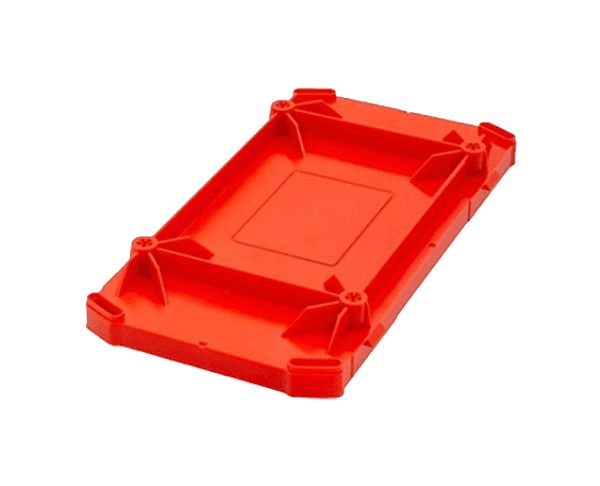
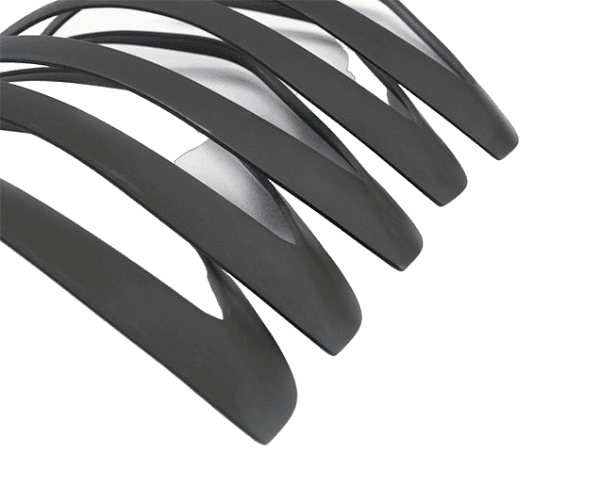
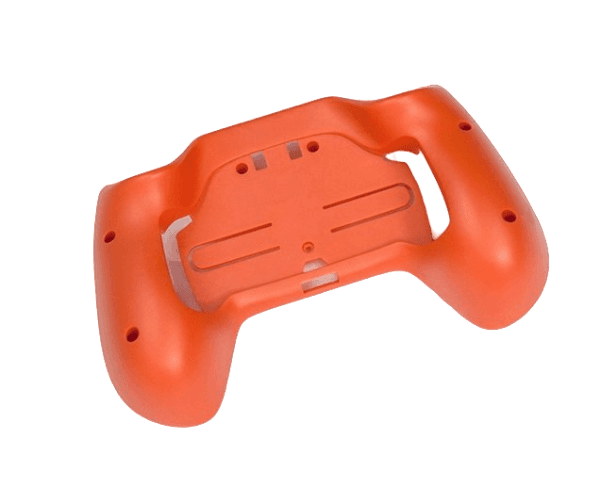
Silicone molding gives high-quality parts comparable to injection-molded components. That makes vacuum cast models suited to fit and function testing, marketing and limited series of final parts. Vacuum casting also supports many finishing degrees, and we can match the finish you need.
Best for
- Low-volume production
- Pre-launch product testing
- Small series of housings and covers
- Concept models and prototypes
Technical specifications
Standard figures for this process. Ask us if your part needs something outside these limits.
| Specification | Detail |
|---|---|
| Standard lead time | Up to 10 copies within 15 working days |
| Standard accuracy | ±0.3% (lower limit ±0.3 mm on dimensions smaller than 100 mm) |
| Minimum wall thickness | At least 0.75 mm so the mold fills properly. We recommend at least 1.5 mm for best results. |
| Maximum part dimensions | Limited by the vacuum chamber (1900 x 900 x 750 mm) and by part volume (maximum 10 litres). |
| Typical quantities | Up to 25 copies per mold, depending on the complexity of the mold and the casting material |
| Surface structure | High-quality finish comparable to injection molding |
Vacuum casting materials
Material grades are confirmed in your quote.
ABS
Rigid and tough for housings and functional prototypes.
PC
Strong and heat resistant, including clear grades.
Rubber
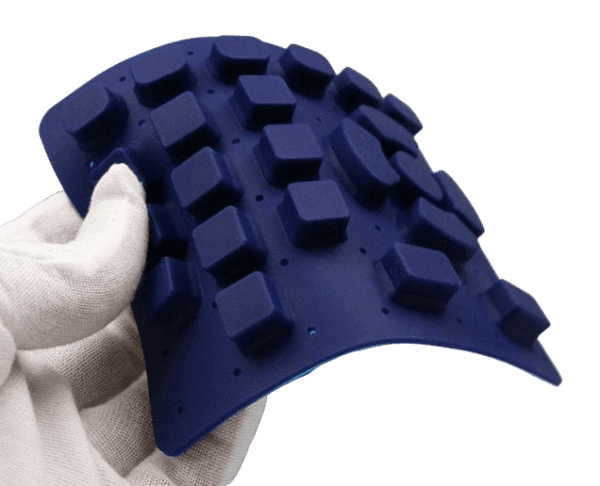
Flexible parts such as seals, grips and soft-touch covers.
Wax
Wax copies for casting and jewellery work.
PP
Flexible and impact resistant for hinges and everyday parts.
Benefits of vacuum casting
High accuracy
Parts follow a high-quality master model, so intricate details stay in place.
Economical
Equipment and materials cost less than steel tooling, which suits small businesses and start-ups.
Short lead time
Once the mold is made, no extra tooling or machining is needed, so parts can be ready within days.
Wide range of materials
Thermoplastic-like and thermoset-like materials let you match your requirements.
Vacuum casting applications
How vacuum casting works
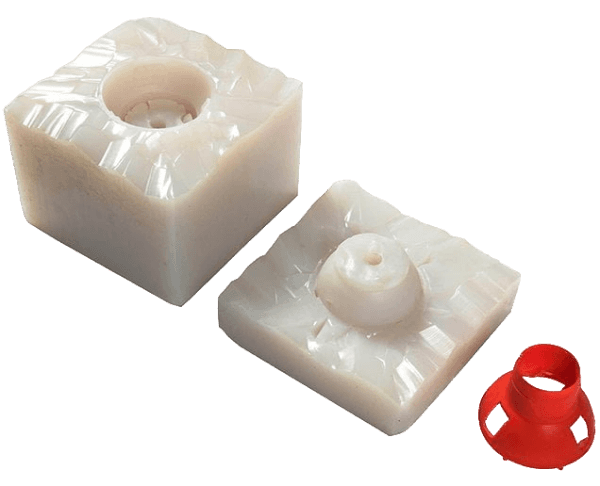
It starts with a master model, usually made by stereolithography or laser sintering with a high-quality surface. A silicone mold is cast around the master under vacuum to avoid air bubbles. After curing, the mold is cut open and the master is removed, leaving a cavity for copies.
The 3D model
Your CAD file is prepared for the master.
Master is built
The master part is built with SLA for a smooth surface.
Master is finished
Support is removed and the master is finished.
Silicone mold
The master is immersed in silicone to form the mold.
Casting under vacuum
Polyurethane is poured into the mold and cast under vacuum.
Finishing
Excess material is removed and the part is finished.
Vacuum casting design tips
Simple rules that give you a better part and a faster quote.
Wall thickness
Use at least 1.5 mm for best results. 0.75 mm is the minimum for the mold to fill.
Part size
Parts must fit the vacuum chamber and stay under 10 litres in volume.
Quantity
Plan for up to 25 copies per mold. Order more molds for larger runs.
Finish
Tell us the colour, gloss or texture you need so we can match it.
Master quality
The surface of the master is copied, so a smooth master gives smooth copies.
File requirements
Send STL or STEP files with the correct scale and units.
Vacuum casting FAQ
How many copies can one mold make?
Typically up to 25 copies per mold, depending on the complexity of the mold and the casting material.
How long does vacuum casting take?
Up to 10 copies can be ready within 15 working days.
What is the maximum size?
Parts are limited by the vacuum chamber, 1900 x 900 x 750 mm, and by a maximum part volume of 10 litres.
How accurate are cast parts?
Standard accuracy is ±0.3% with a lower limit of ±0.3 mm on dimensions smaller than 100 mm.
Is vacuum casting better than 3D printing?
For small series of 10 to 25 parts with a smooth finish, it often is. It copies one master many times at a lower cost per part.
Do I need to provide a master?
No. We build the master from your CAD file, usually with SLA, then make the mold.
Ready to get your vacuum casting quote?
Send your file or idea and we will reply with a suggestion and a quote.
Explore other processes
FDM 3D printing
Strong functional parts and prototypes in engineering filaments.
SLA resin printing
Smooth, detailed parts and master patterns.
SLS nylon printing
Durable nylon parts with no support structures.
MJF printing
Consistent nylon parts for prototypes and small series.
Injection molding
Production plastic parts at a lower cost per piece.